Table of Contents
- Introduction and Classification of Biomolecular Compounds
- Carbohydrates – Classification, Glucose and Fructose
- Disaccharides, Polysaccharides and Importance of Carbohydrates
- Amino Acids, Proteins and Peptide Linkages
- Protein Structures, Classification and Denaturation
- Enzymes and Mechanism of Enzyme Action
- Vitamins – Classification, Sources and Deficiency Diseases
- Nucleic Acids – Composition, Structure, DNA and RNA
- Hormones, High-Yield Revision and Exam Strategy
- Short-Answer Questions – 30 Questions with Detailed Answers
- Long-Answer Questions – 15 Questions with Detailed Answers
1. Introduction and Classification of Biomolecular Compounds
Introduction to Biomolecules for Class 12 Chemistry
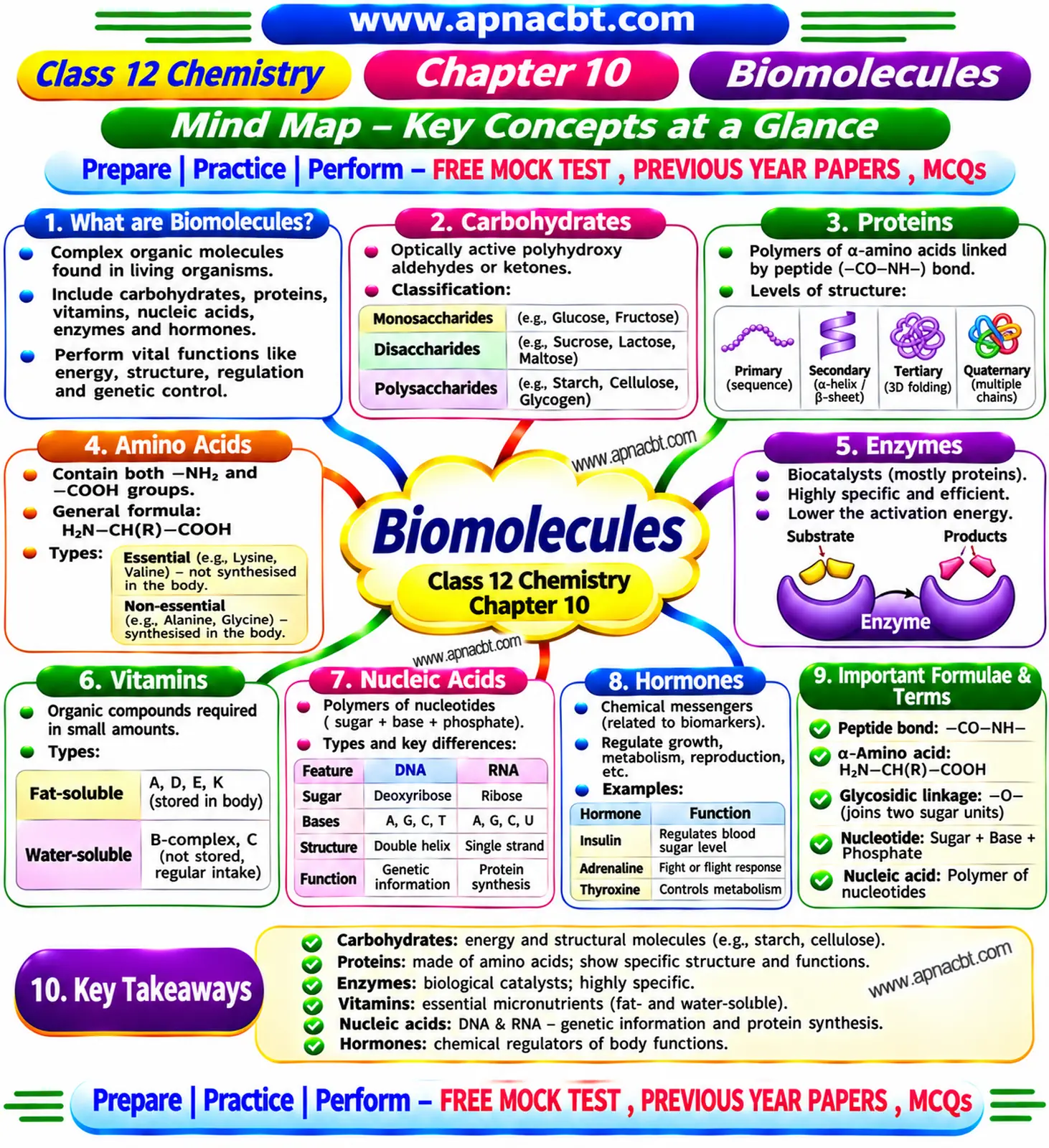
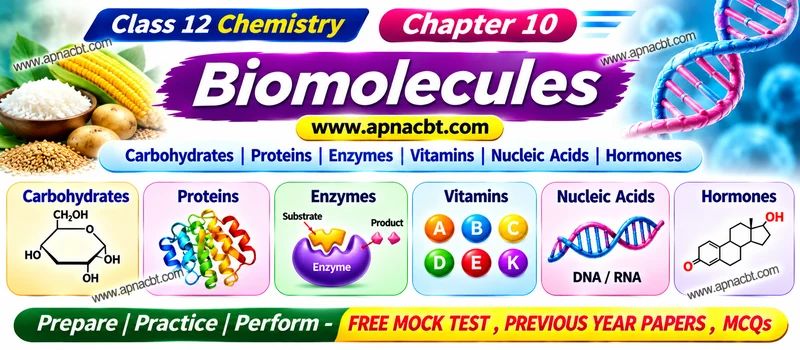
Biomolecules are the complex organic molecules that occur in living systems and participate in molecular processes that sustain life. This lesson is designed for CBSE Board Exams, NEET preparation and concept revision. The NCERT chapter focuses on carbohydrates, proteins, enzymes, vitamins, nucleic acids and hormones, explaining their structures, classification and biological roles.
2. Carbohydrates – Classification, Glucose and Fructose
Carbohydrates and Their Classification
Carbohydrates are naturally occurring organic compounds such as glucose, sucrose and starch. NCERT defines them as optically active polyhydroxy aldehydes or ketones, or compounds that produce such units on hydrolysis.
Monosaccharides
A monosaccharide cannot be hydrolysed into a simpler polyhydroxy aldehyde or ketone. Glucose, fructose and ribose are important examples. On the basis of the functional group, monosaccharides are called aldoses when they contain an aldehyde group and ketoses when they contain a keto group. The number of carbon atoms is also used in naming: triose, tetrose, pentose, hexose and heptose.
Glucose – preparation and open-chain evidence
Glucose is an aldohexose and is also known as dextrose. It can be obtained by hydrolysis of sucrose with dilute acid, producing glucose and fructose in equal amounts. Commercially, glucose is obtained by hydrolysis of starch under acidic conditions. The open-chain structure of glucose was supported by several observations.
- Its formula is C6H12O6.
- Prolonged heating with HI gives n-hexane, indicating a straight chain of six carbon atoms.
- Reaction with hydroxylamine and addition of HCN indicate a carbonyl group.
- Oxidation with bromine water gives gluconic acid, supporting an aldehydic group.
- Acetylation gives glucose pentaacetate, indicating five hydroxyl groups.
- Oxidation with nitric acid gives saccharic acid, supporting the presence of a primary alcoholic group.
Cyclic structure, anomers and D/L notation
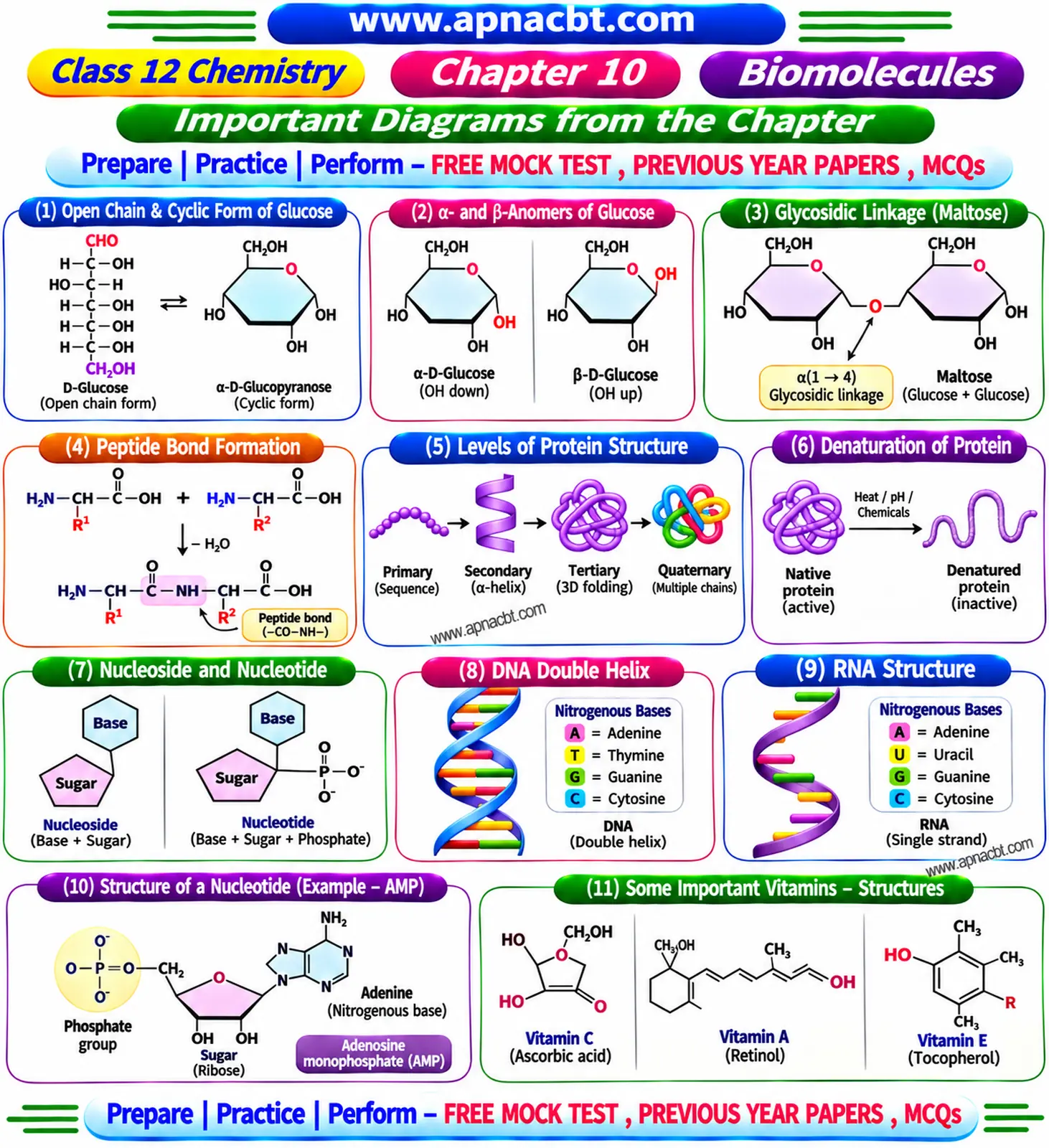
The open-chain structure does not explain all properties of glucose. The C-5 hydroxyl group can react with the aldehyde group at C-1 to form a six-membered cyclic hemiacetal called pyranose. The two forms differ at the anomeric carbon and are called α and β anomers.
D-(+)-glucose has D configuration and is dextrorotatory. D/L configuration and (+)/(–) optical rotation are different concepts: configuration is assigned relative to glyceraldehyde, while the sign describes optical rotation.
Fructose
Fructose is a ketohexose obtained with glucose during sucrose hydrolysis. It is naturally present in fruits, honey and vegetables and is a sweetener. It contains a ketonic group at C-2 and exists in cyclic forms. Its five-membered cyclic structure is called a furanose form. D-(–)-fructose belongs to the D series but is laevorotatory, again showing why configuration and optical rotation must not be confused.
3. Disaccharides, Polysaccharides and Importance of Carbohydrates
Disaccharides and Glycosidic Linkage
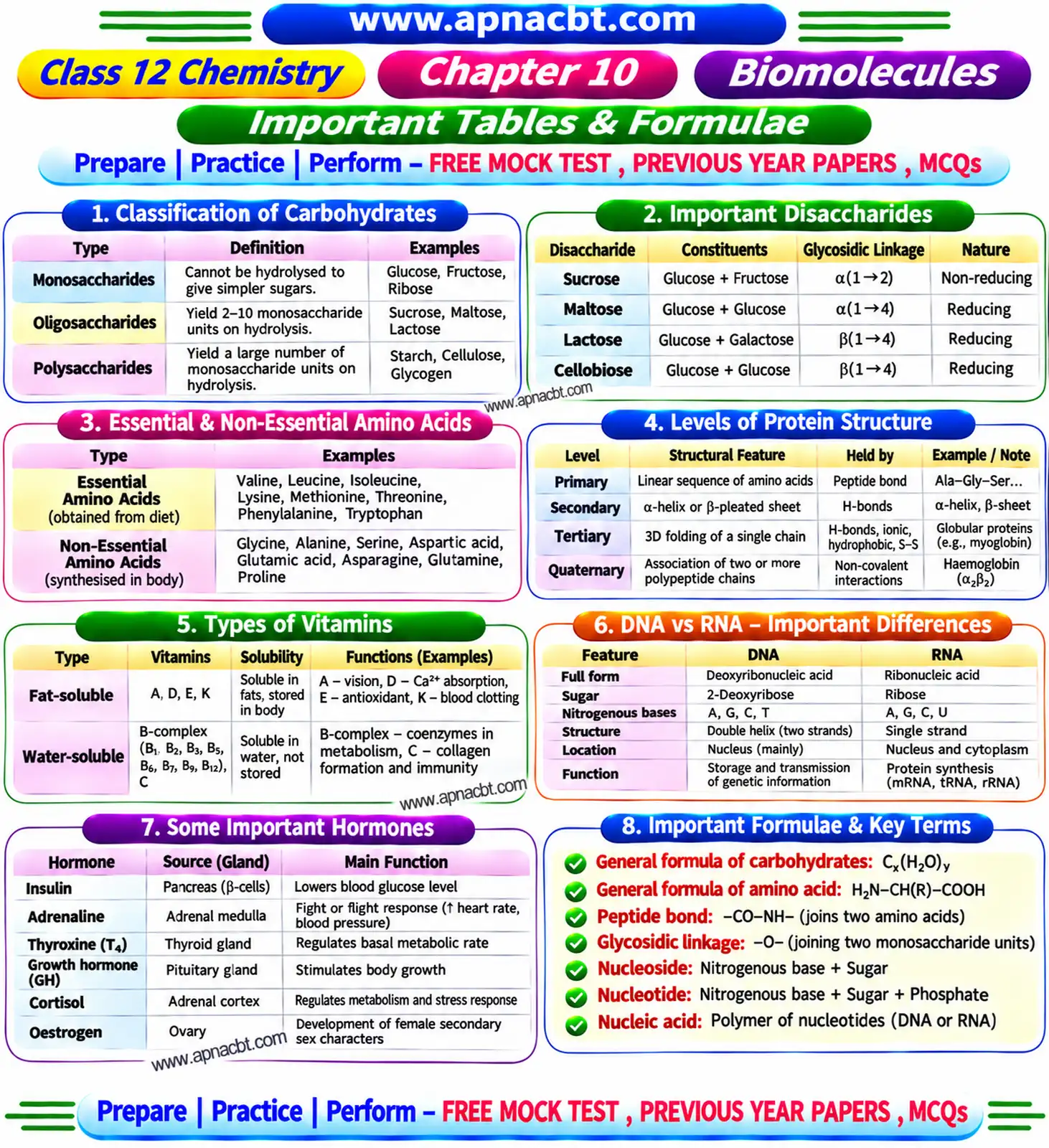
Disaccharides yield two monosaccharide units on hydrolysis. The two units are joined through an oxygen linkage formed with loss of water, called a glycosidic linkage. Whether a disaccharide is reducing or non-reducing depends on whether an appropriate reducing group remains available.
Sucrose
Sucrose gives equimolar D-(+)-glucose and D-(–)-fructose on hydrolysis. The units are linked between C-1 of α-D-glucose and C-2 of β-D-fructose. Because both reducing groups participate in the linkage, sucrose is a non-reducing sugar. Hydrolysis changes the overall optical rotation from dextrorotatory sucrose to a laevorotatory mixture because the negative rotation of fructose is greater in magnitude than the positive rotation of glucose. The hydrolysis product is therefore called invert sugar.
Maltose and lactose
Maltose contains two α-D-glucose units. The C-1 of one glucose is linked to C-4 of the other, leaving a free reducing group; therefore maltose is reducing. Lactose is milk sugar and consists of β-D-galactose and β-D-glucose linked through C-1 of galactose and C-4 of glucose. It is also a reducing sugar because the glucose unit can provide a free aldehydic form.
Polysaccharides
Polysaccharides contain many monosaccharide units joined by glycosidic linkages. Starch is the principal storage polysaccharide of plants and consists of amylose and amylopectin. Amylose is a long, unbranched chain of α-D-glucose units joined mainly through C-1 to C-4 linkages. Amylopectin is branched, with C-1 to C-4 linkages in the chain and C-1 to C-6 linkages at branch points.
Cellulose is a straight-chain polysaccharide made exclusively of β-D-glucose units linked through C-1 to C-4. It is a major constituent of plant cell walls. Glycogen is the storage carbohydrate in animals and is structurally similar to amylopectin but more highly branched. It occurs particularly in liver, muscles and brain.
4. Amino Acids, Proteins and Peptide Linkages
Proteins and Amino Acids
Proteins are abundant substances in living systems and are required for growth, maintenance, structure and function. NCERT describes them as polymers of α-amino acids containing amino and carboxyl groups.
Classification of amino acids
Amino acids may be classified as α, β, γ, δ and so on according to the position of the amino group relative to the carboxyl group. Only α-amino acids are obtained on hydrolysis of proteins in the NCERT treatment. They may also be classified as acidic, basic or neutral according to the relative number of amino and carboxyl groups. Amino acids that can be synthesised by the body are non-essential; those that must be obtained through diet are essential.
Zwitterions and amphoteric behaviour
Amino acids are generally colourless crystalline solids. In water, the carboxyl group can lose a proton and the amino group can accept one, producing a zwitterion. Hence they show amphoteric behaviour.
Peptide linkage
A peptide linkage is an amide linkage formed between the carboxyl group of one amino acid and the amino group of another, with elimination of water. The resulting –CO–NH– linkage joins amino-acid residues. Two amino acids form a dipeptide, three form a tripeptide, and longer chains are called polypeptides. A polypeptide containing more than one hundred amino-acid residues and a molecular mass above 10,000 u is described in the NCERT chapter as a protein, although the distinction is not absolutely sharp.
5. Protein Structures, Classification and Denaturation
Levels of Protein Structure
Proteins can be classified by molecular shape into fibrous and globular proteins. Fibrous proteins have polypeptide chains arranged in parallel and held together by interactions such as hydrogen and disulphide bonds; they are generally insoluble in water. Keratin and myosin are examples. Globular proteins arise when polypeptide chains coil into compact structures and are usually soluble in water. Insulin and albumin are examples.
Primary structure
The primary structure is the specific sequence of amino acids in a polypeptide chain. Even a change in amino-acid sequence can produce a different protein. In an examination, primary structure should be associated with sequence.
Secondary structure
Secondary structure refers to regular folding of the backbone into α-helix and β-pleated sheet forms. Hydrogen bonding stabilises these arrangements. The α-helix is helical, whereas β-pleated sheets contain extended chains or segments held side by side.
Tertiary and quaternary structures
Tertiary structure represents the overall three-dimensional folding of a polypeptide chain. Hydrogen bonds, disulphide linkages, van der Waals forces and electrostatic attractions contribute to stabilisation. Quaternary structure occurs when a protein contains two or more polypeptide subunits and describes their spatial arrangement.
Denaturation
A native protein has a characteristic three-dimensional structure and biological activity. Changes in temperature or pH can disturb hydrogen bonds and other interactions, causing the protein to unfold and lose biological activity. This process is called denaturation. The secondary and tertiary structures are destroyed while the primary structure remains intact. Coagulation of egg white on boiling and curdling of milk are common examples.
6. Enzymes and Mechanism of Enzyme Action
Enzymes as Biological Catalysts
Living organisms depend on coordinated chemical reactions. Digestion, absorption and energy production involve sequences of reactions that occur under comparatively mild biological conditions. Enzymes are biocatalysts that make these reactions proceed efficiently. Almost all enzymes are globular proteins, and they are highly specific for particular reactions and substrates.
Nomenclature and specificity
Many enzyme names are derived from the substrate or class of compounds on which they act. Maltase catalyses the hydrolysis of maltose to glucose. Some names are related to the reaction catalysed; oxidoreductases catalyse oxidation-reduction processes. The suffix “-ase” is common in enzyme names.
Effect on activation energy
Enzymes are required only in small amounts and act by reducing the magnitude of activation energy. The NCERT example compares acid hydrolysis of sucrose, for which the activation energy is 6.22 kJ mol−1, with enzyme-catalysed hydrolysis by sucrase, for which it is 2.15 kJ mol−1. This illustrates how enzyme action provides a lower-energy pathway.
7. Vitamins – Classification, Sources and Deficiency Diseases
Vitamins and Their Biological Importance
Vitamins are organic compounds required in small amounts in the diet for specific biological functions. Their deficiency produces characteristic diseases. Most cannot be synthesised in the human body, although plants can synthesise almost all vitamins and intestinal bacteria can produce some required vitamins. Excess intake can also be harmful, so vitamin supplements should not be taken indiscriminately.
Fat-soluble vitamins
Vitamins A, D, E and K are fat-soluble. They are soluble in fats and oils and are not readily soluble in water. NCERT notes that they can be stored in the liver and adipose tissues.
Water-soluble vitamins
B-group vitamins and vitamin C are water-soluble. They generally need regular dietary supply because they are readily excreted in urine and are not extensively stored, with vitamin B12 being an important exception.
| Vitamin | Important source | Deficiency disease / effect |
|---|---|---|
| A | Fish liver oil, carrots, butter, milk | Night blindness, xerophthalmia |
| B1 (Thiamine) | Yeast, milk, green vegetables, cereals | Beri beri |
| B2 (Riboflavin) | Milk, egg white, liver, kidney | Cheilosis and digestive disorders |
| B6 (Pyridoxine) | Yeast, milk, egg yolk, cereals, grams | Convulsions |
| B12 | Meat, fish, egg, curd | Pernicious anaemia |
| C (Ascorbic acid) | Citrus fruits, amla, green leafy vegetables | Scurvy |
| D | Sunlight exposure, fish, egg yolk | Rickets, osteomalacia |
| E | Vegetable oils | RBC fragility and muscular weakness |
| K | Green leafy vegetables | Increased blood clotting time |
8. Nucleic Acids – Composition, Structure, DNA and RNA
Nucleic Acids and Genetic Information
Nucleic acids are long-chain polymers of nucleotides, also called polynucleotides. The two main types are DNA and RNA, which are associated with heredity and genetic information.
Chemical composition
Complete hydrolysis of a nucleic acid yields a pentose sugar, phosphoric acid and nitrogen-containing heterocyclic bases. DNA contains β-D-2-deoxyribose, while RNA contains β-D-ribose. DNA has adenine, guanine, cytosine and thymine. RNA has adenine, guanine, cytosine and uracil.
Nucleoside and nucleotide
A nucleoside consists of a nitrogenous base attached to the 1′ position of a pentose sugar. When phosphoric acid is linked to the sugar, the resulting unit is a nucleotide. Nucleotides are connected by phosphodiester linkages involving the 5′ and 3′ carbon atoms of the sugar residues.
DNA structure and complementary base pairing
DNA has a double-stranded helical structure. Its strands are complementary because adenine pairs with thymine and cytosine with guanine through hydrogen bonds.
RNA and its types
RNA is generally single stranded and can fold back on itself. Three important types are messenger RNA (mRNA), ribosomal RNA (rRNA) and transfer RNA (tRNA). Together these RNA molecules participate in protein synthesis. DNA stores the coded information for protein synthesis, while RNA molecules help carry out the synthesis process.
Biological functions and DNA fingerprinting
DNA is the chemical basis of heredity and maintains the identity of species. It can self-duplicate during cell division so that genetic information is passed to daughter cells. DNA fingerprinting uses the uniqueness of DNA sequences for identification, including forensic applications, paternity testing and identification of bodies in accidents.
| Feature | DNA | RNA |
|---|---|---|
| Sugar | 2-Deoxyribose | Ribose |
| Fourth base | Thymine | Uracil |
| Typical structure | Double strand | Single strand |
| Main role | Genetic information | Protein synthesis roles |
| Common RNA types | Not applicable | mRNA, rRNA, tRNA |
9. Hormones, High-Yield Revision and Exam Strategy
Hormones and Final Revision of the Chapter
Hormones are intercellular messengers released by endocrine glands into the bloodstream. They may be steroids, polypeptides or amino-acid derivatives; examples include estrogens, insulin, epinephrine and thyroxine.
Board strategy: In descriptive answers, begin with the definition, add classification or structure, explain the key property, and finish with an example or biological significance. NEET strategy: prioritise exact pairs and contrasts such as sucrose/non-reducing, starch/cellulose, fibrous/globular, DNA/RNA and fat-soluble/water-soluble vitamins.
Continue with APNA CBT Class XII, APNA CBT Prepare and APNA CBT.
10. Short-Answer Questions – 30 Questions with Detailed Answers
1. What are carbohydrates?
Answer: Carbohydrates are optically active polyhydroxy aldehydes or ketones, or compounds that produce such units on hydrolysis. Glucose, fructose, sucrose and starch are common examples.
2. What is a monosaccharide?
Answer: A monosaccharide is a carbohydrate that cannot be hydrolysed into a simpler polyhydroxy aldehyde or ketone. Glucose, fructose and ribose are examples.
3. What is a glycosidic linkage?
Answer: A glycosidic linkage is the oxygen linkage joining two monosaccharide units. It is formed through loss of a water molecule during condensation between suitable hydroxyl groups.
4. Why is sucrose a non-reducing sugar?
Answer: In sucrose, the reducing groups of glucose and fructose are involved in the glycosidic linkage between C-1 of α-D-glucose and C-2 of β-D-fructose. Therefore, no free reducing group remains.
5. Why is maltose a reducing sugar?
Answer: Maltose contains two glucose units joined through C-1 of one glucose and C-4 of the other. The second glucose retains a free anomeric carbon and can produce a reducing aldehydic form.
6. What is an anomer?
Answer: Anomers are stereoisomers that differ in configuration at the anomeric carbon formed during cyclisation of a monosaccharide. α-D-glucose and β-D-glucose are anomers.
7. What is the difference between aldose and ketose?
Answer: An aldose contains an aldehyde group as its characteristic carbonyl group, whereas a ketose contains a ketonic group. Glucose is an aldose and fructose is a ketose.
8. What is the main structural difference between starch and cellulose?
Answer: Starch is a polymer of α-D-glucose and includes amylose and amylopectin, whereas cellulose is a straight-chain polymer of β-D-glucose units linked through C-1 to C-4 glycosidic bonds.
9. What is glycogen?
Answer: Glycogen is the principal storage polysaccharide in animals. It resembles amylopectin but is more highly branched and is stored particularly in liver, muscles and brain.
10. What are amino acids?
Answer: Amino acids are compounds containing amino and carboxyl groups. Proteins are polymers of α-amino acids, which may also contain different functional groups in their side chains.
11. What is a zwitterion?
Answer: A zwitterion is a dipolar ion containing both positive and negative charges in the same molecule. Amino acids form zwitterions in aqueous solution when the amino group is protonated and the carboxyl.
12. Why are amino acids amphoteric?
Answer: Amino acids contain both an acidic carboxyl group and a basic amino group. Consequently, they can react with both acids and bases and therefore show amphoteric behaviour.
13. What is a peptide linkage?
Answer: A peptide linkage is the –CO–NH– amide linkage formed between the carboxyl group of one amino acid and the amino group of another, with elimination of water.
14. What is the primary structure of a protein?
Answer: The primary structure is the specific sequence of amino acids in a polypeptide chain. A change in this sequence can produce a different protein.
15. Name the two common secondary structures of proteins.
Answer: The two common secondary structures are the α-helix and β-pleated sheet. They arise from regular folding of the polypeptide backbone and are stabilised mainly by hydrogen bonding.
16. What is denaturation?
Answer: Denaturation is the loss of the native three-dimensional structure and biological activity of a protein due to physical or chemical changes such as temperature or pH. Primary structure remains intact in the.
17. What are enzymes?
Answer: Enzymes are biological catalysts that accelerate biochemical reactions under mild conditions. Almost all enzymes are globular proteins and are highly specific for substrates and reactions.
18. How do enzymes affect activation energy?
Answer: Enzymes reduce the magnitude of activation energy required for a reaction by providing a more favourable reaction pathway. They are therefore effective catalysts even in small quantities.
19. What are vitamins?
Answer: Vitamins are organic compounds required in small amounts in the diet for specific biological functions. Their deficiency causes characteristic diseases or physiological disorders.
20. Which vitamins are fat soluble?
Answer: Vitamins A, D, E and K are fat soluble. They are soluble in fats and oils and can be stored in the liver and adipose tissues.
21. Which vitamins are mainly water soluble?
Answer: The B-group vitamins and vitamin C are water soluble. They generally require regular dietary supply because they are readily excreted, although vitamin B12 is an important exception to storage behaviour.
22. What is a nucleoside?
Answer: A nucleoside is formed when a nitrogenous base is attached to the 1′ position of a pentose sugar. It does not contain a phosphate group.
23. What is a nucleotide?
Answer: A nucleotide consists of a nitrogenous base, a pentose sugar and a phosphate group. Nucleotides are the monomeric units of nucleic acids.
24. What is a phosphodiester linkage?
Answer: A phosphodiester linkage joins nucleotides in a nucleic-acid chain through phosphate groups connecting the 5′ and 3′ positions of adjacent sugar units.
25. What sugar is present in DNA and RNA?
Answer: DNA contains β-D-2-deoxyribose, while RNA contains β-D-ribose. The difference at the 2′ position is a fundamental structural distinction between them.
26. What are the bases present in DNA?
Answer: DNA contains adenine, guanine, cytosine and thymine, abbreviated A, G, C and T.
27. What are the three major types of RNA?
Answer: The three major types are messenger RNA (mRNA), ribosomal RNA (rRNA) and transfer RNA (tRNA). They participate in different stages or roles in protein synthesis.
28. What are hormones?
Answer: Hormones are molecules that act as intercellular messengers. Endocrine glands release them into the bloodstream, which transports them to their sites of action.
29. State one important function of insulin.
Answer: Insulin helps maintain blood glucose within a narrow range. It is released in response to a rapid rise in blood glucose and promotes regulation of glucose levels.
30. Differentiate DNA and RNA in one structural point.
Answer: DNA contains 2-deoxyribose and thymine and is typically double stranded, whereas RNA contains ribose and uracil and is generally single stranded.
11. Long-Answer Questions – 15 Questions with Detailed Answers
These questions are suitable for descriptive CBSE Board preparation and detailed concept revision. In an examination, use definitions, classifications, structures, examples and labelled diagrams wherever appropriate.
1. Classify carbohydrates and explain the basis of classification.
Answer: Carbohydrates are broadly classified by hydrolysis into monosaccharides, oligosaccharides and polysaccharides. Monosaccharides cannot be hydrolysed further; examples are glucose and fructose. Oligosaccharides yield two to ten units and include disaccharides. Polysaccharides yield many units and include starch, cellulose and glycogen. Monosaccharides may also be aldoses or ketoses.
2. Explain the evidence supporting the open-chain structure of glucose.
Answer: Glucose has formula C6H12O6 and gives n-hexane with HI, indicating a six-carbon chain. It forms an oxime and cyanohydrin, showing a carbonyl group. Bromine water gives gluconic acid, supporting an aldehydic group. Acetylation gives pentaacetate, indicating five hydroxyl groups. Nitric acid gives saccharic acid, supporting a primary alcoholic group.
3. Explain the cyclic structure and anomerism of glucose.
Answer: Glucose forms a cyclic hemiacetal when its C-5 hydroxyl group reacts with the aldehyde group at C-1. A six-membered pyranose ring results. The new stereocentre at C-1 is the anomeric carbon. The α and β forms differ at this carbon and are called anomers. These cyclic forms can remain in equilibrium with the open-chain form.
4. Compare sucrose, maltose and lactose.
Answer: Sucrose contains glucose and fructose and is non-reducing because both reducing centres participate in its glycosidic linkage. Maltose contains two glucose units and is reducing because one anomeric centre remains available. Lactose contains galactose and glucose and is also reducing because the glucose unit retains a free reducing group.
5. Explain the structures and functions of starch, cellulose and glycogen.
Answer: Starch is the main plant storage polysaccharide and contains α-glucose as amylose and amylopectin. Cellulose is a straight-chain polymer of β-glucose with C-1 to C-4 linkages and forms plant cell walls. Glycogen is the animal storage polysaccharide and is more highly branched than amylopectin. Thus their glucose configuration and branching determine their roles.
6. Explain the classification and amphoteric behaviour of amino acids.
Answer: Amino acids contain amino and carboxyl groups. They may be α, β, γ and so on according to the position of the amino group. In water they form zwitterions containing positive and negative charges, so they react with both acids and bases. Acidic, basic and neutral classes depend on the relative numbers of carboxyl and amino groups.
7. Describe peptide linkage and protein formation.
Answer: A peptide linkage is the –CO–NH– amide bond formed by condensation between the carboxyl group of one amino acid and the amino group of another, with loss of water. Two amino acids form a dipeptide, three form a tripeptide and longer chains form polypeptides. Proteins are highly organised polypeptide systems with specific structures and functions.
8. Describe the four levels of protein structure.
Answer: Primary structure is the amino-acid sequence. Secondary structure includes α-helix and β-pleated sheet, mainly stabilised by hydrogen bonds. Tertiary structure is the overall three-dimensional folding of a polypeptide and involves several interactions, including disulphide linkages. Quaternary structure describes the arrangement of two or more polypeptide subunits.
9. Explain denaturation of proteins with examples.
Answer: Denaturation is loss of the native three-dimensional structure and biological activity of a protein due to changes such as temperature or pH. According to NCERT, secondary and tertiary structures are destroyed while the primary structure remains intact. Boiling of egg white and curdling of milk are common examples.
10. Explain enzymes and their role as biocatalysts.
Answer: Enzymes are biological catalysts, generally globular proteins, that accelerate biochemical reactions under mild conditions. They are highly specific for substrates and reactions. Maltase catalyses hydrolysis of maltose to glucose. Enzymes are effective in small quantities because they lower activation energy and provide a favourable reaction pathway.
11. Classify vitamins and explain their importance with examples.
Answer: Vitamins are organic compounds required in small amounts for specific biological functions. A, D, E and K are fat soluble and can be stored in tissues. B-group vitamins and C are water soluble and generally require regular dietary supply. Deficiency causes characteristic diseases such as night blindness, beri beri, scurvy and rickets.
12. Describe the chemical composition and structure of nucleic acids.
Answer: Nucleic acids are polynucleotides made of nucleotide units. Hydrolysis gives pentose sugar, phosphoric acid and nitrogenous bases. DNA contains deoxyribose, while RNA contains ribose. A nucleoside is base plus sugar; a nucleotide also contains phosphate. Nucleotides are joined by phosphodiester linkages, forming nucleic-acid chains.
13. Differentiate DNA and RNA in detail.
Answer: DNA contains 2-deoxyribose, thymine and is generally double stranded. RNA contains ribose, uracil and is generally single stranded. DNA stores hereditary information. RNA occurs as mRNA, rRNA and tRNA and participates in protein synthesis. In DNA, adenine pairs with thymine and cytosine pairs with guanine.
14. Explain the biological functions of nucleic acids.
Answer: DNA stores hereditary information and duplicates during cell division. It contains the coded information needed for protein synthesis. RNA molecules participate in protein synthesis: mRNA carries the message, rRNA is associated with ribosomes and tRNA helps bring amino acids. DNA fingerprinting uses characteristic DNA sequences for identification and forensic applications.
15. Explain hormones and give important examples from the chapter.
Answer: Hormones are chemical messengers released by endocrine glands into the bloodstream. Insulin helps regulate blood glucose, while glucagon tends to increase it. Thyroxine is an iodinated derivative of tyrosine. Testosterone and estradiol are major sex hormones, and progesterone prepares the uterus for implantation. Hormones therefore coordinate important physiological functions.